Primary Care Network
🔗 Quantum Data — Backbone Digital Backbone & Primary Care Networks.
Ayushman Arogya Mandirs: The Primary Care Network
Section titled “Ayushman Arogya Mandirs: The Primary Care Network”India is transforming its primary healthcare through a massive, 400,000-node network, operating under the supreme tagline: “Arogyam Paramam Dhanam” (Health is the Supreme Wealth).
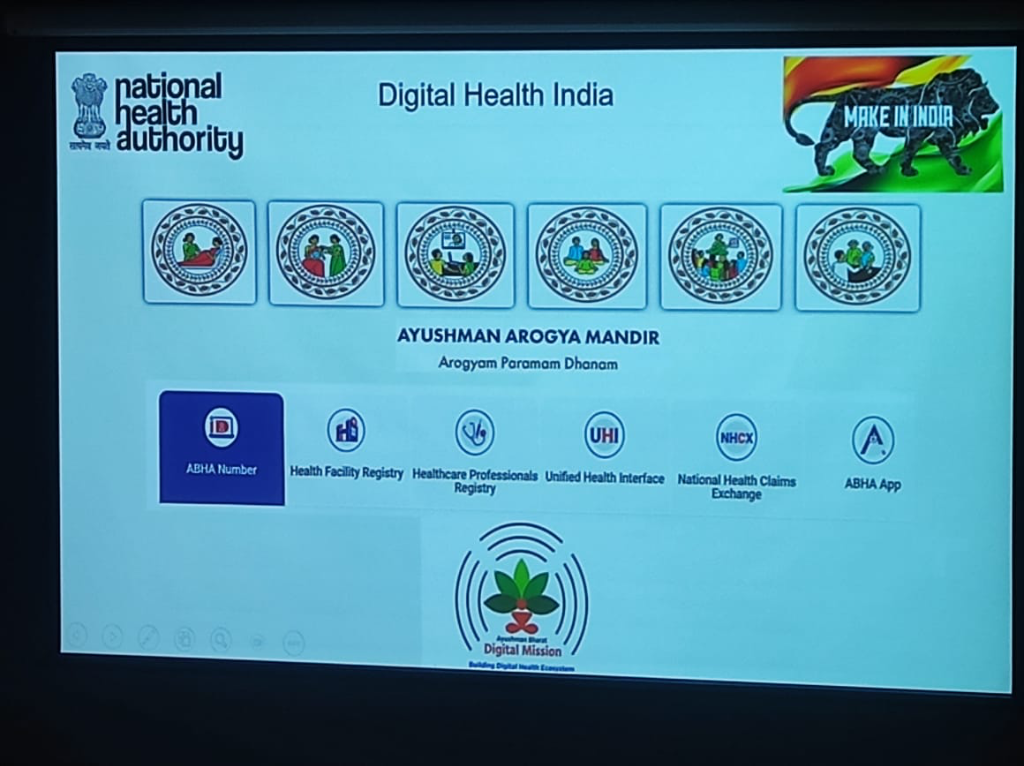 Figure: The National Health Authority’s architectural vision for Digital Health India, showcasing the Ayushman Arogya Mandir pillars and the national digital backbone.
-
The Six Pillars of Frontline Care: The Arogya Mandir framework is visualized through six core service categories:
- Maternal Health: Comprehensive care for pregnancy and childbirth.
- Child Health: Neonatal, infant, and adolescent care.
- Tele-consultation: Bringing specialized care to remote areas via digital links.
- Reproductive Health: Family planning and reproductive services.
- Communicable Diseases: Management of common infectious diseases and outpatient care.
- NCD & Wellness: Screening and management of non-communicable diseases, alongside yoga and community wellness.
-
Transition from PHCs: What started as 25,000 Primary Health Centers (PHCs) at independence has evolved into 400,000+ Ayushman Arogya Mandirs (formerly Health and Wellness Centers).
-
The Geriatric Priority: In a move that addresses a globally neglected segment, India’s new primary care framework places a dedicated focus on Geriatric Medicine (60+ care). While the world often ignores the elderly, the Indian model integrates them into the frontline digital health loop.
Community-First Care: The Preventive Strategy
Section titled “Community-First Care: The Preventive Strategy”Dr. Prabhu emphasized that health begins in the community. The strategic goal is to manage health before a person becomes a patient. If managed well in the community, they don’t even need to enter the hospital, reducing friction and cost across the entire system.
- Community Gatekeeping: The journey begins with Anganwadi and ASHA workers who act as the primary physical triage layer.
- Vitals & Triage: Patient information and vitals are captured at the community level before escalation.
- Diagnostic Services: Basic lab work and minor treatments delivered locally.
- Health Camps: Periodic physical check-ups and specialist screenings.
- Tele-Medicine: Continuous consultation and risk screening.
- Digital Bridge: Tele-medicine connects these community hubs to specialists, ensuring that distance is no longer a barrier to quality care.
- Awareness Communication: IEC (Information, Education, and Communication) campaigns focused on Maternal and Child Health (MCH), Nutrition, and non-communicable diseases (NCDs).
Population Health: The real benefit for India’s population lies in Primary and Preventive Health. By focusing on lifestyle diseases and early intervention, ABDM aims to keep people out of hospitals rather than just managing them once they are there.