
Resource Challenges (Speaker: Mr. Avinash Pandey)
Financial & Resource Support: Bridging the Digital Divide (Speaker: Mr. Avinash Pandey)
Section titled “Financial & Resource Support: Bridging the Digital Divide (Speaker: Mr. Avinash Pandey)”Achieving digital maturity represents a significant capital and operational investment, especially for smaller institutions.
- The Funding Hurdle: Small hospitals (30-50 beds) require dedicated support for Hardware Procurement, reliable connectivity, and specialized Manpower for data entry and system maintenance.
- Government Assistance: There is an urgent need for financial subsidies or grant frameworks from the government/NHA to offset these initial costs, ensuring that digital health doesn’t become a “Tier-1 only” privilege.
Individual Challenges and Solutions (Speaker: Mr. Avinash Pandey)
Section titled “Individual Challenges and Solutions (Speaker: Mr. Avinash Pandey)”Implementation success depends on moving from generic goals to specific, granular solutions for institutional friction points.
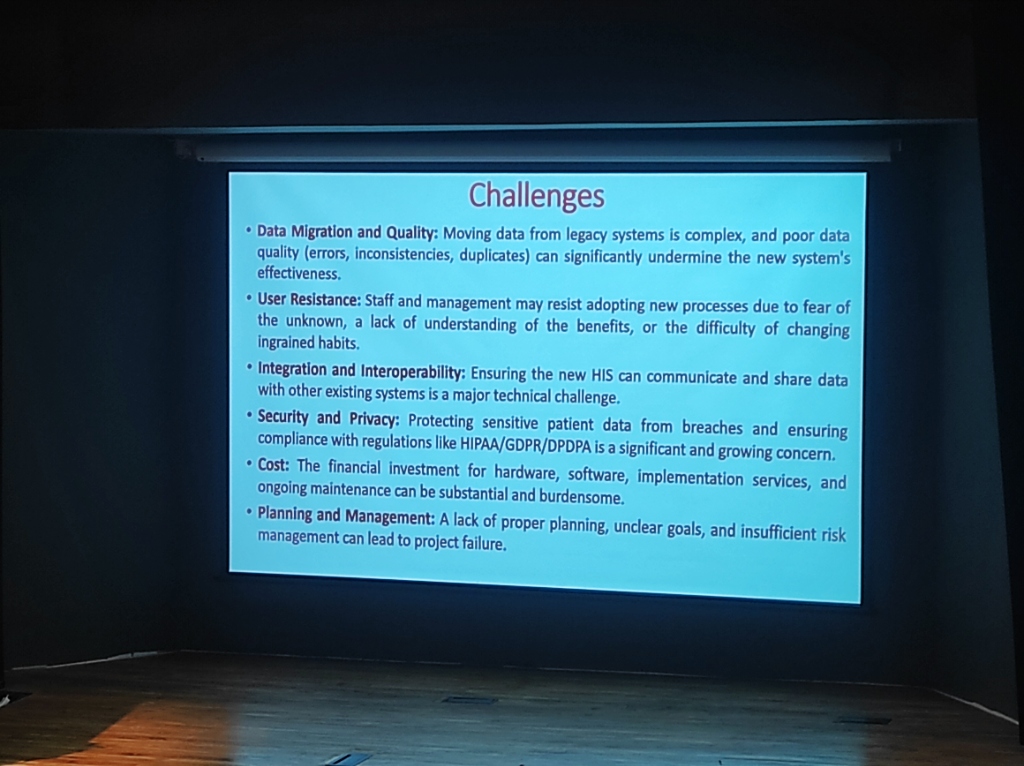 Figure: Overarching framework of digital health implementation challenges—from data quality to cost and management.
1. Resistance to Change
Section titled “1. Resistance to Change”Many employees and managers are accustomed to existing, often manual, processes and may be reluctant to adopt new digital methods due to fear of the unknown or a lack of understanding of the benefits.
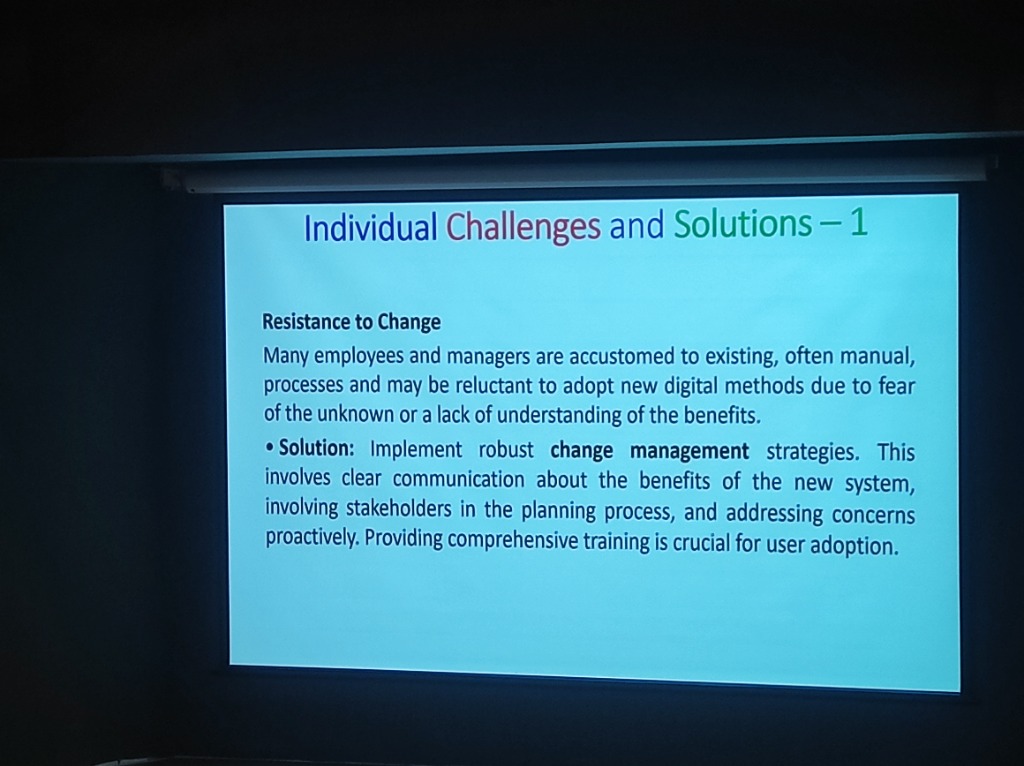 Figure: Overcoming the human barrier of resistance through robust change management and training.
- Solution: Implement robust change management strategies. This involves clear communication about the benefits of the new system, involving stakeholders in the planning process, and addressing concerns proactively. Providing comprehensive training is crucial for user adoption.
2. Data Migration and Integration
Section titled “2. Data Migration and Integration”Moving large volumes of data from legacy systems to a new HIS can be slow, complex, and prone to errors.
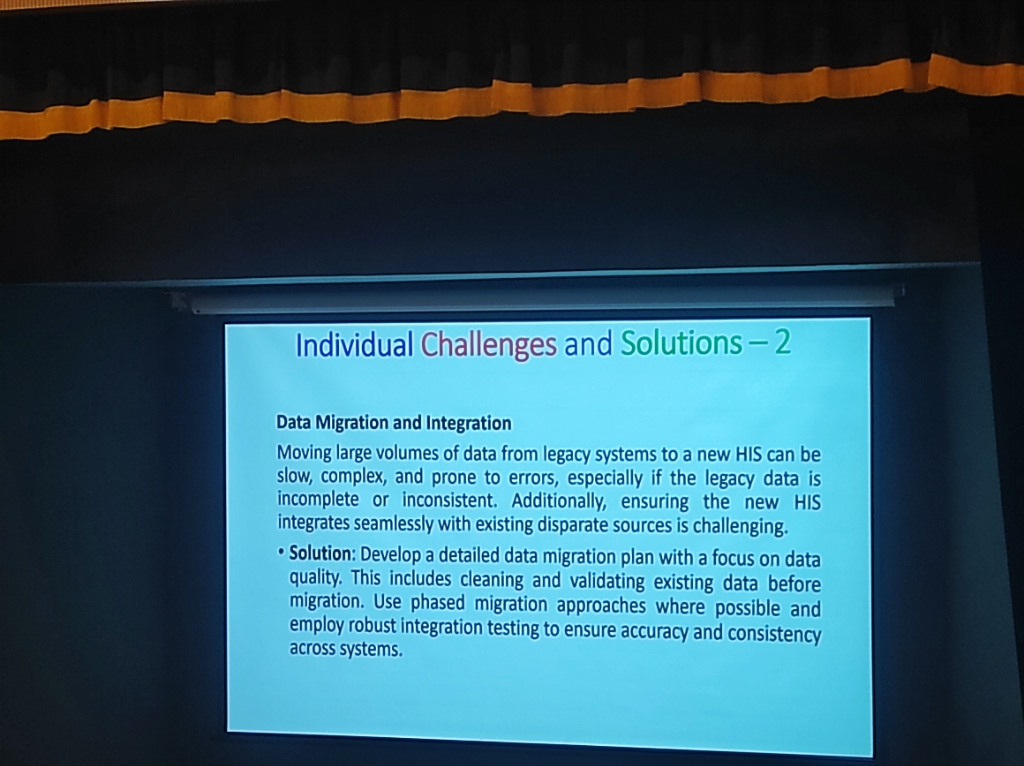 Figure: Overcoming the complexity of legacy data migration and disparate source integration.
- Solution: Develop a detailed data migration plan with a focus on data quality. This includes cleaning and validating existing data before migration. Use phased migration approaches where possible and employ robust integration testing to ensure accuracy and consistency across systems.
2. Budget and Resource Constraints
Section titled “2. Budget and Resource Constraints”HIS implementations are significant financial undertakings. Unforeseen costs, scope creep, or poor initial planning can lead to budget overruns and project failure.
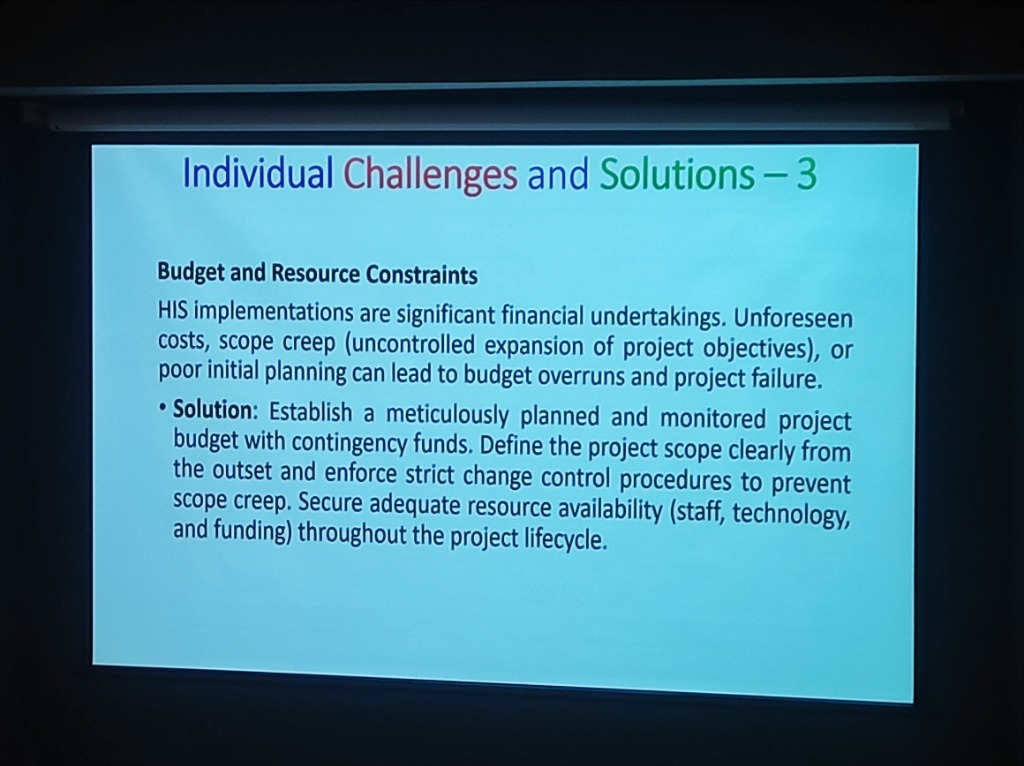 Figure: Managing fiscal risks and ensuring resource availability throughout the project lifecycle.
- Solution: Establish a meticulously planned and monitored project budget with contingency funds. Define the project scope clearly from the outset and enforce strict change control procedures to prevent scope creep. Secure adequate resource availability (staff, technology, and funding) throughout the project lifecycle.
3. Data Privacy and Security Concerns
Section titled “3. Data Privacy and Security Concerns”Handling sensitive patient health information raises significant concerns regarding potential data breaches, cyberattacks, or accidental data leakage.
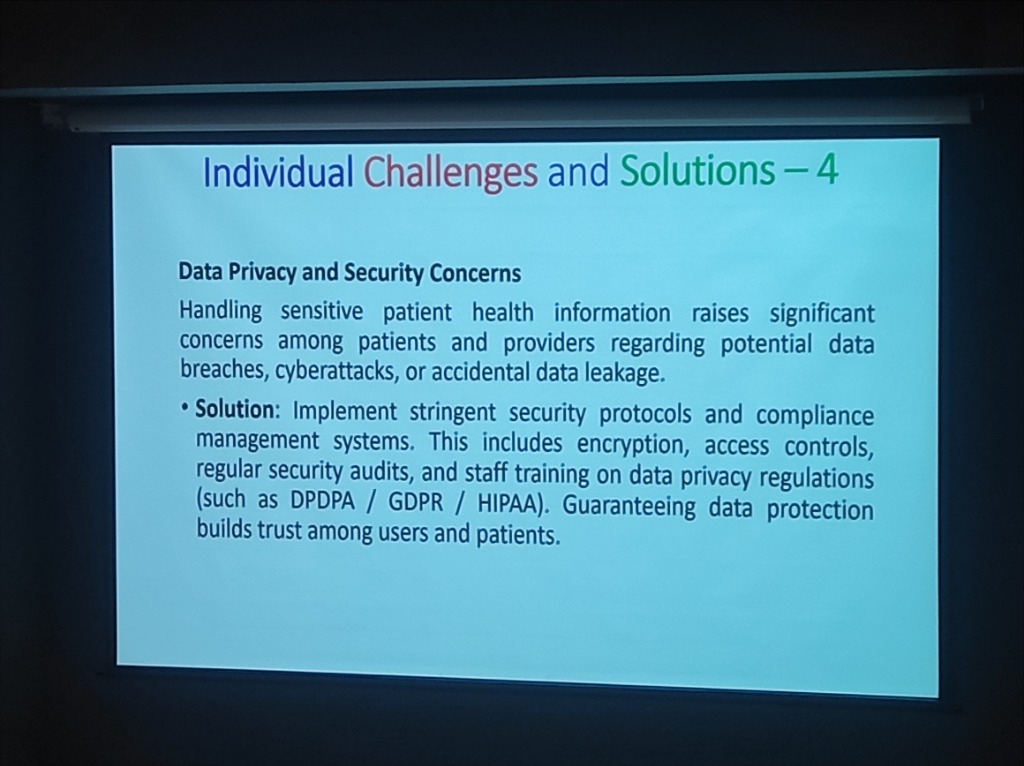 Figure: Building trust through stringent security protocols and compliance management.
- Solution: Implement stringent security protocols and compliance management systems. This includes encryption, access controls, regular security audits, and staff training on data privacy regulations (such as DPDPA / GDPR / HIPAA). Guaranteeing data protection builds trust among users and patients.
4. Stakeholder Involvement and Project Management
Section titled “4. Stakeholder Involvement and Project Management”Lack of clear governance and inconsistent stakeholder interest can hamper implementation. Effective project management is essential to coordinate these complex projects.
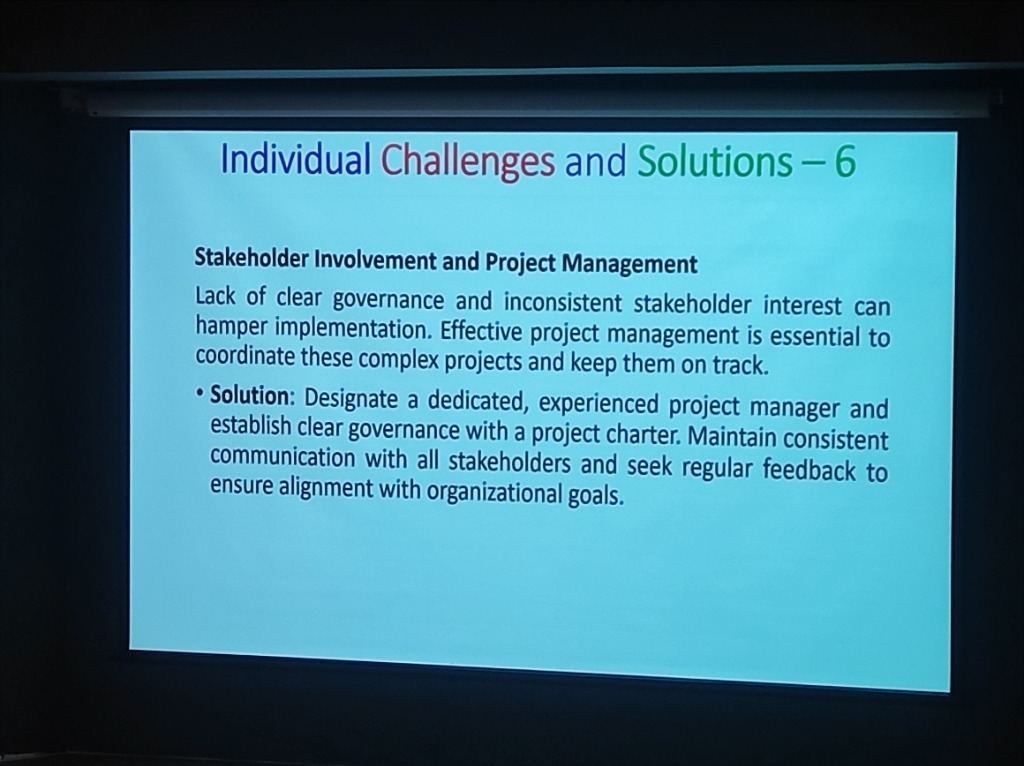 Figure: Ensuring alignment through clear governance and proactive communication.
- Solution: Designate a dedicated, experienced project manager and establish clear governance with a project charter. Maintain consistent communication with all stakeholders and seek regular feedback to ensure alignment with organizational goals.