Ecosystem Action
Demonstrating the Ecosystem in Action
Section titled “Demonstrating the Ecosystem in Action”The “Standard Trinity” and NRCeS frameworks aren’t just theoretical; they are showcased through powerful live demonstrations that bring these concepts to life for clinicians and engineers alike.
Bridging Research and Practice (Speaker: Ms. Manisha Mantri)
Section titled “Bridging Research and Practice (Speaker: Ms. Manisha Mantri)”-
Synthetic Data Generation: Using the SNOMED CT Implementation Demonstrator, KCDH shows how to generate synthetic patient data based on real-world statistics from the Global Burden of Disease (GBD) Study. This allows for populating EHR systems with realistic test cases reflecting national disease prevalence patterns by age and gender.
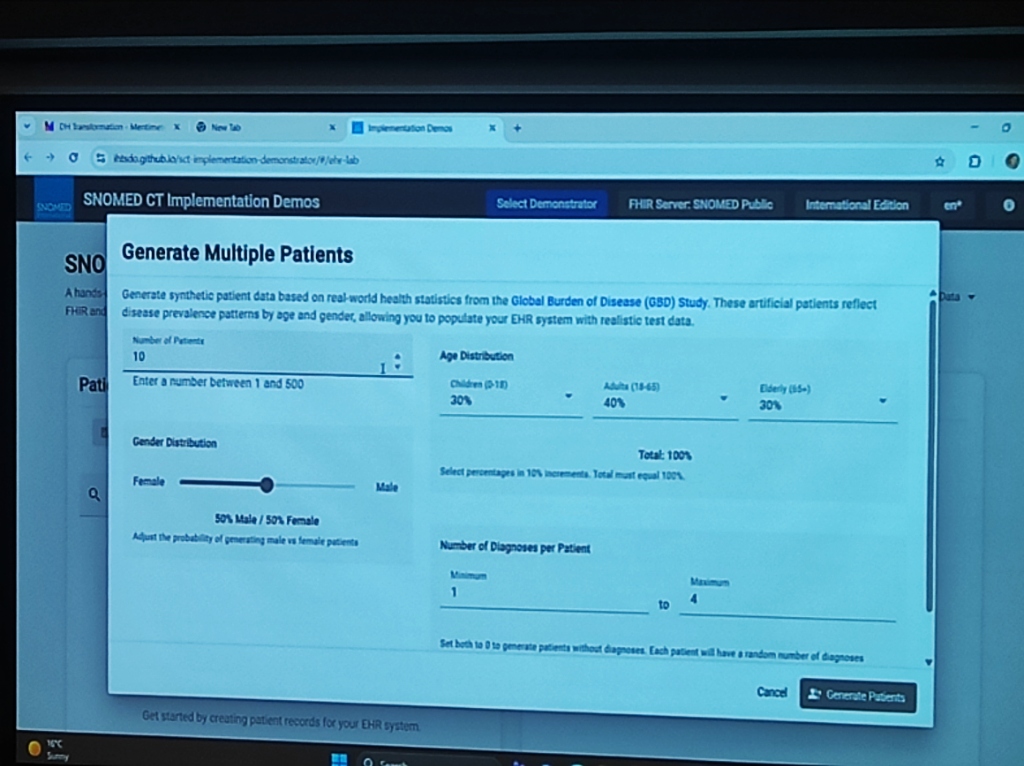 Figure: The SNOMED CT Implementation Demonstrator generating synthetic patient cohorts based on GBD disease prevalence.
 -
AI-Assisted Clinical Forms: The demo showcases FHIR-compliant Clinical Forms—such as Allergy and Intolerance documentation—enhanced with AI-Assisted Entry. This reduces the “key-in” friction for doctors by providing propensity-based models that predict likely clinical outcomes and decision support.
-
Clinical Decision Support (CDS) & Alert Generation: The ecosystem demonstrates real-time CDS Alert Generation. When a clinician adds a problem (e.g., Anaphylaxis) to the Problems List, the system automatically triggers alerts and decision support pathways based on standardized rules (e.g., contraindications or immediate care protocols). This transforms the EHR from a passive repository into an active participant in clinical safety.
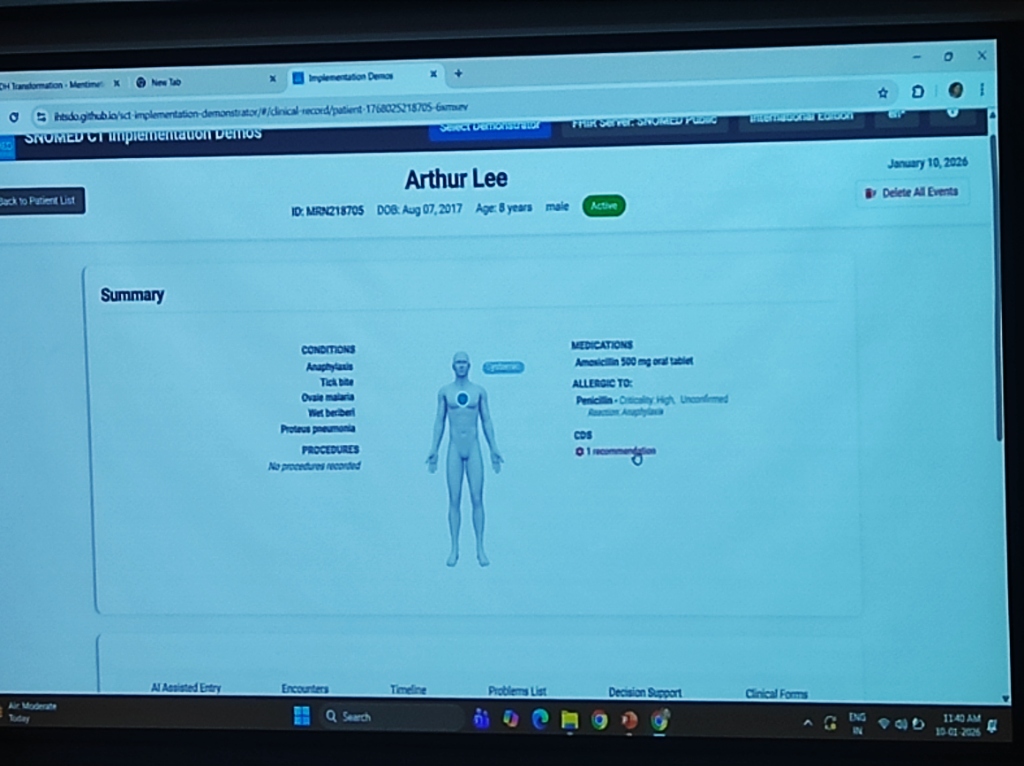 Figure: Live demonstration of CDS Alerts triggered by SNOMED-coded clinical entries (e.g., Penicillin allergy).
 -
Integrated Patient Timeline: Displays a unified problem list, timeline, and decision support—all powered by FHIR and SNOMED CT—providing a template for what a modern, interoperable HIS should look like.
-
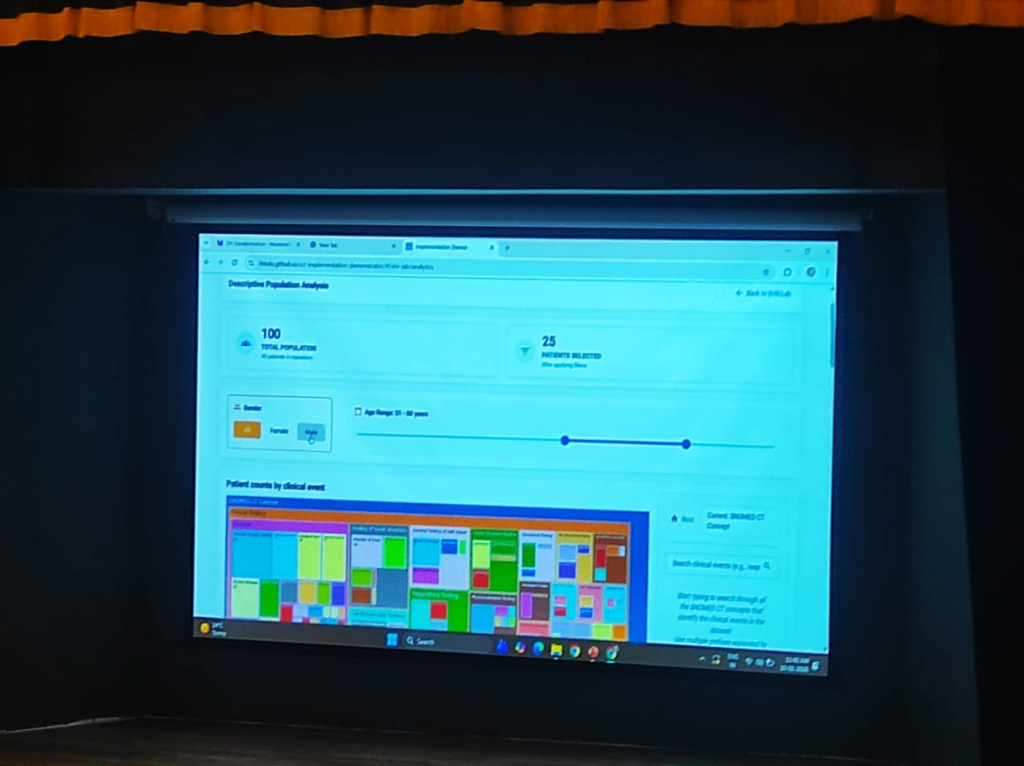
Descriptive Population Analysis: The power of standardized coding is best seen at the population level. By using SNOMED CT as the medical coding foundation, the system enables seamless Descriptive Population Analysis. Clinicians and researchers can filter and analyze patient counts by clinical events, age ranges, and gender distributions across the entire repository without any manual data cleaning.